The $54 Billion Problem
Crypto attackers use a two-stage approach: First, trick victims into revealing private keys through phishing. Then, send minimal ETH to compromised wallets to fund massive token theft. Even with perfect phishing detection, compromised wallets remain vulnerable - until now.
📈 Crypto Theft by Year
$4.5B
$3.8B
$14.0B
$3.8B
$1.8B
$2.2B
*Sources: Chainalysis, Immunefi, Comparitech - Current value of stolen crypto: $54B+
💀 How Attackers Win Today
Phishing Attack
Fake websites, malicious links, or social engineering trick victims into revealing private keys
Wallet Compromise
Attacker gains control of wallet containing valuable tokens but no ETH for gas fees
Strategic Funding
Send minimal ETH (~$7.50) to compromised wallet to fund token transfers
Rapid Execution
Drain $10,000+ in tokens before victim notices or security systems react
Once ETH arrives in a compromised wallet, attackers have 15-30 seconds to drain all tokens before traditional security systems can react.
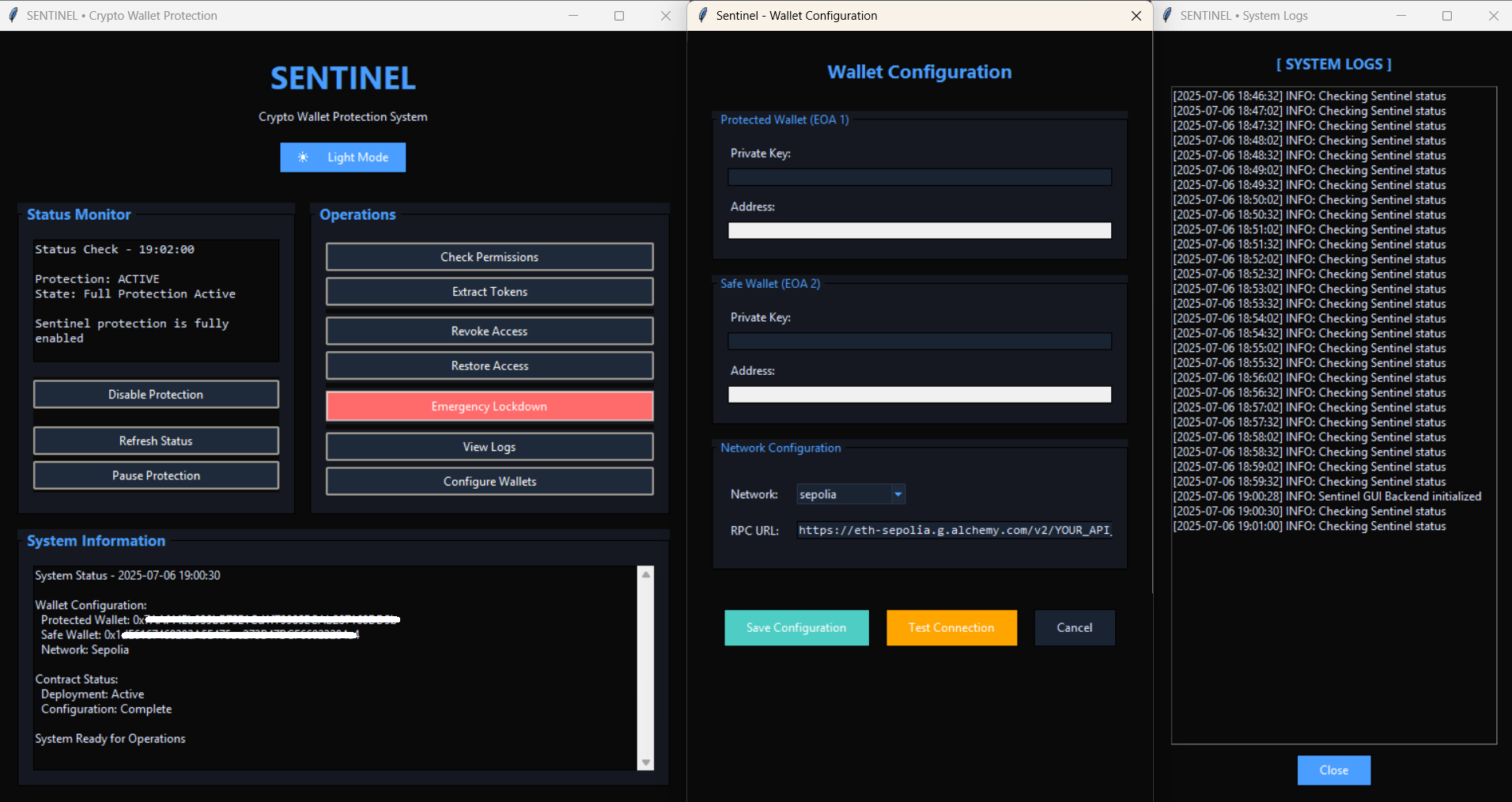
🛡️ Sentinel: Complete Protection
Phishing Happens
Victim unfortunately falls for sophisticated phishing attack
Wallet Protected
Sentinel-protected wallet remains invulnerable despite compromise
Instant Interception
Any funding ETH immediately forwarded away (same transaction)
Attack Impossible
No ETH = No gas = No transactions possible, ever
Even if an attacker has your private keys, they can never execute a single transaction. Sentinel makes compromised wallets completely powerless.
🔑 The Paradigm Shift
Traditional security focuses on preventing compromise. Sentinel accepts that phishing will happen and makes the compromise irrelevant. Even with your private keys, attackers become powerless against atomic protection.